
Remarks by Cătălin Predoiu at the U.S.–Romania Regional Economic Forum | Iași, 10/23/2026
Romanian version: https://predoiupolitica.ro/pilonul-economic-al-parteneriatului-strategic-romania-sua-si-securitatea-nationala/
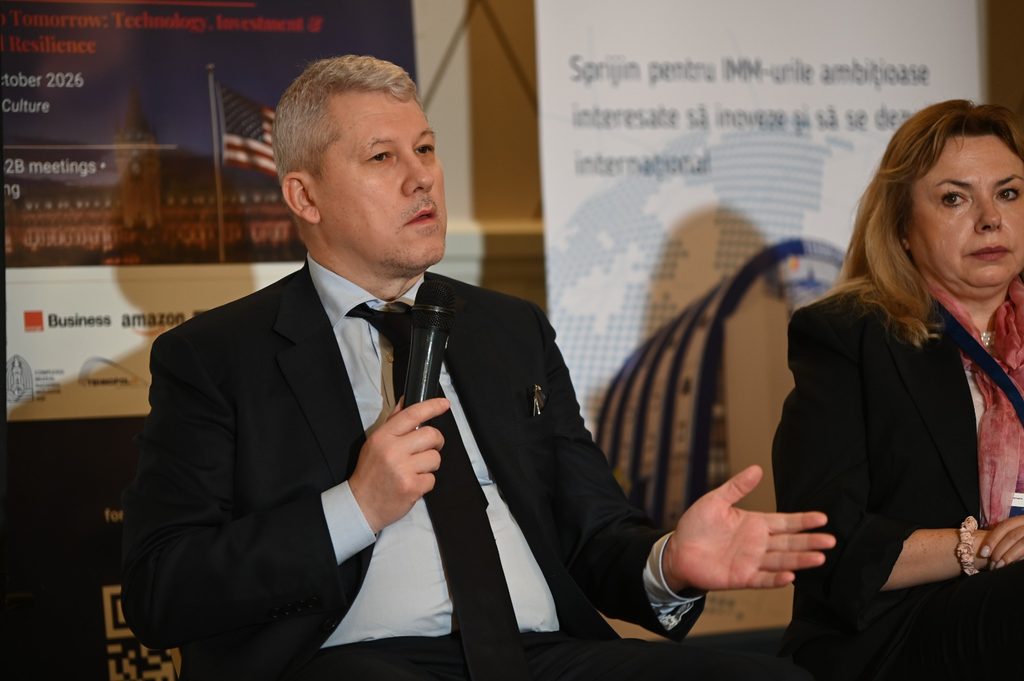
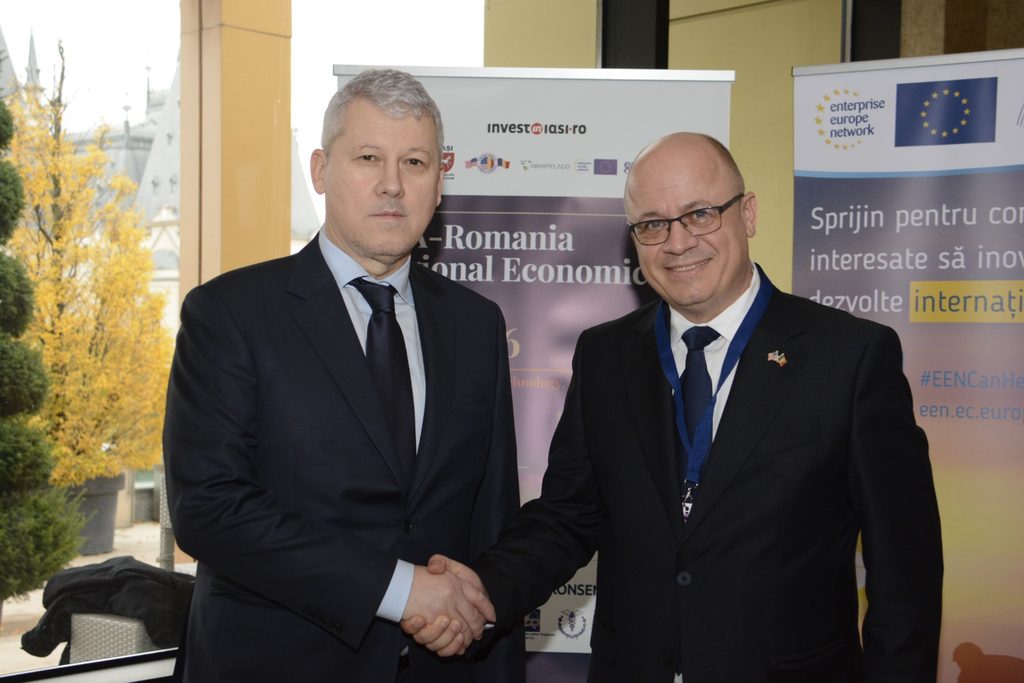
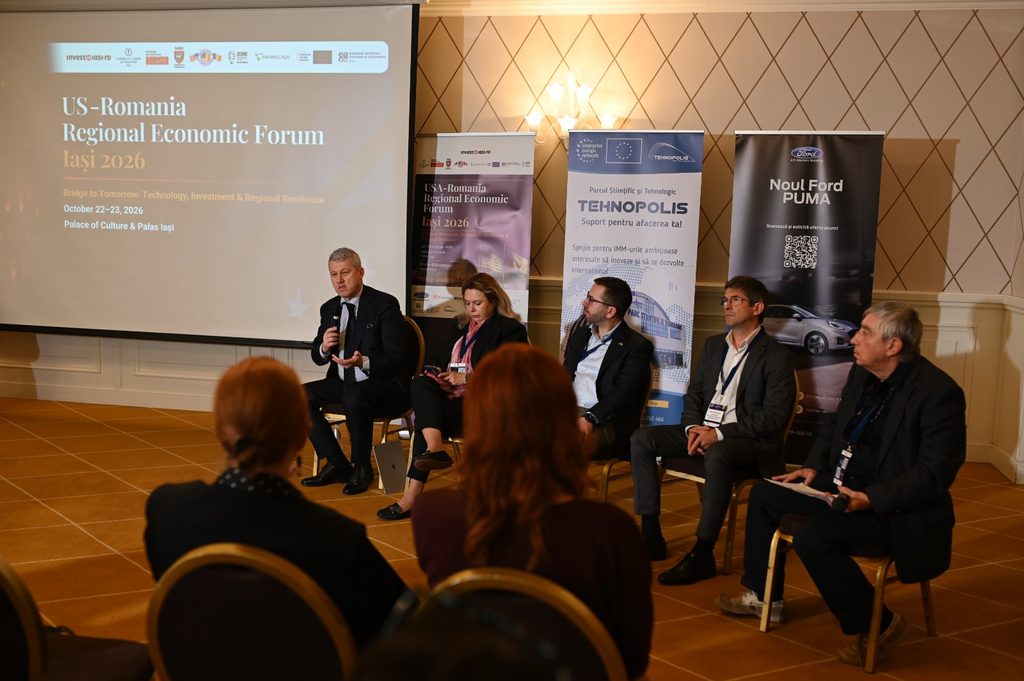
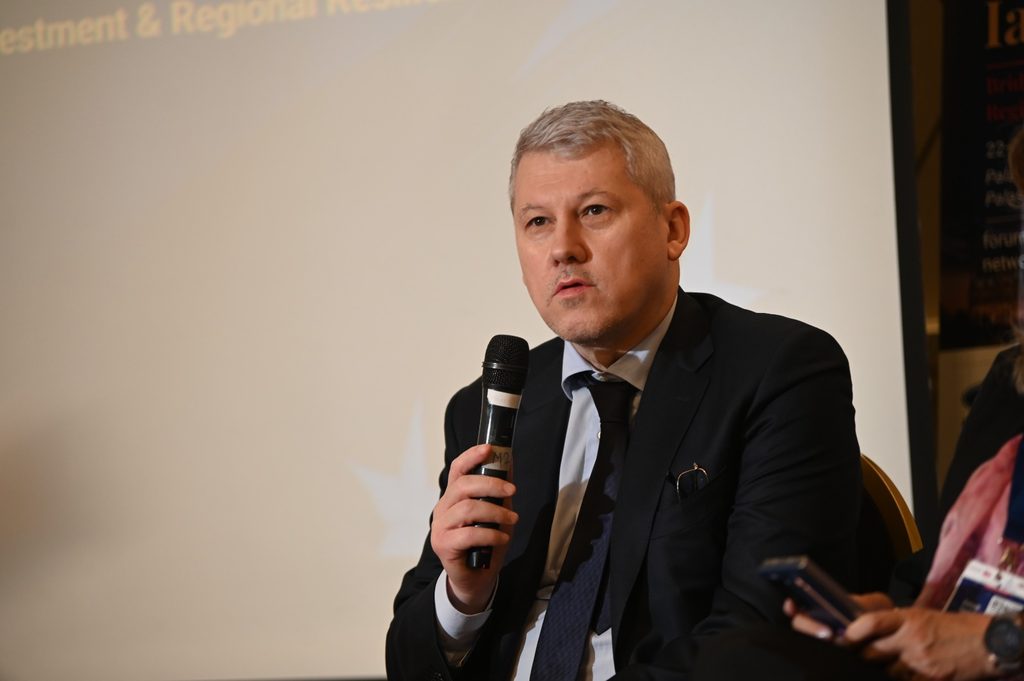
Ladies and Gentlemen,
A few weeks ago, Secretary of State Marco Rubio delivered a historic speech in Athens, on Pnyx Hill, overlooking the Acropolis. In that speech, he said:
“We choose the unapologetic pursuit of national power: […] to reindustrialize our economy, to rebuild our defense […]”
In his remarks, Secretary Rubio explained that the United States is seeking to strengthen its national power by rebuilding America’s industrial base, taking back control of critical supply chains, developing strategic technologies, and restoring its defense capabilities. It is a vision in which economic strength and national security are two sides of the same strategy.
On relations between the United States and Europe, including member states of the European Union, Secretary Rubio made the case for a stronger transatlantic alliance. He called on Europe to join this effort to rebuild economic and strategic strength through increased defense investment, expanded industrial capacity, and new partnerships.
His message was clear: the United States and Europe must build their strength and security together, based on shared interests, respect for national sovereignty, and meaningful contributions from every ally.
By Europe, we may mean Europe as a whole, the European Union, or each European country in its own right, including our own, Romania.
Over the next few minutes, I’d like to outline answers to the following questions:
How has the national security landscape changed since Russia launched its full-scale invasion of Ukraine?
How have U.S. national security thinking and strategic interests evolved?
How does the Trump administration approach bilateral security relationships around the world?
Why is the economic pillar of the U.S.–Romania Strategic Partnership so important to national security?
How can we mobilize the economic pillar of the Strategic Partnership with the United States to strengthen national security?
What has been done to strengthen national security through the economic pillar?
What can and must be done to strengthen national security through the economic pillar?
I’ll approach these questions pragmatically, sticking closely to the facts, while trying to avoid getting lost in concepts and theories that may or may not reflect the realities we face.
Ladies and Gentlemen,
Two years ago, I was in Washington on a mission related to Romania’s accession to the Schengen Area. During that visit, I met with more than 30 senators and members of the House of Representatives, as well as two White House advisers.
Beyond the main purpose of those meetings, and in line with my mandate, I raised another issue: the danger posed by drones falling on Romanian territory, including the risk that one of them might eventually crash in a populated area.
At that time, in 2024, three such drones had come down in open fields on Romanian territory. To date, we’ve recorded dozens of such incidents, including two particularly dangerous ones: the drone that came down in Galați and the one at the Port of Constanța.
We are witnessing a wave of cyberattacks unlike anything we’ve seen before, and it keeps growing.
We are witnessing disinformation campaigns, influence operations, and online efforts designed to deepen divisions within our society, on a scale we have never seen before. And their intensity continues to grow.
In 2024 and 2025, we experienced what I believe to be the most serious case of foreign interference anywhere in the world.
And the list of security challenges goes on.
We must also be prepared for acts of sabotage, and potentially even terrorism.
Every day, Romania’s state institutions responsible for defense, public order, and national security work tirelessly to keep these threats at bay and maintain the country’s level of safety.
Ten years ago, these security realities were not part of our lives. Much of this would have seemed almost inconceivable.
The security landscape has changed: what once looked like a peaceful garden, filled with birdsong, has turned into a jungle where danger lurks at every turn.
Ladies and Gentlemen,
Washington’s approach to security has changed as well.
About a year ago, I had dinner with George Friedman, together with analyst George Scutaru. Friedman is one of America’s most respected national security analysts, the founder of Stratfor, and the author of numerous books and articles on the subject.
Over dinner, George told me something in his direct style that I haven’t forgotten:
“For the past 80 years, America has, to a greater or lesser extent, maintained a Pax Americana for Europe and effectively borne the cost of Europe’s defense. Now we have problems of our own at home. We need to rebuild our industrial strength, and we have challenges to address in the Middle East and the Pacific. Europe is strong and wealthy enough to take responsibility for its own security, at least for conventional ground defense. In the air, we will maintain the nuclear umbrella.”
Numerous other sources confirm this reality.
For example, Thierry de Montbrial, a kind of French and European ‘George Friedman’ and chairman of the World Policy Conference, told me recently:
“Europe must change the way it thinks about national security. Europe was a peace project guaranteed by the United States and NATO. It must adapt to the new security environment and the new technological competition.”
Montbrial has also emphasized this point in several public interviews.
America’s strategic focus has shifted toward the Indo-Pacific and the Middle East. That much is plain to see.
And the Trump administration approaches its bilateral relationships around the world along two main tracks: ideological alignment and/or economic cooperation.
A country doesn’t necessarily have to share the current American administration’s ideological outlook to work successfully with the United States.
What also matters is whether that country is willing to shoulder part of the security burden and has the will and capacity to develop major economic projects with the United States and build a strong relationship based on shared economic interests.
Meanwhile, Europe has begun building its own defense pillar. But that pillar will not be ready for at least another five years.
And when I speak of a European defense pillar, I don’t just mean armies. I also mean logistics, industrial production, integrated supply chains, and logistical and military interoperability.
Europe produces several different types of tanks. Which one will become the tank every European army can use to ensure interoperability? How many years will it take to decide?
So the fundamental question—the key question—is this:
Is it worth building, in this context, an especially close bilateral relationship with the United States, not only on security but also on economics? How do we strengthen our security not only through NATO, but also through an especially close economic relationship with the United States?
Remember Rubio’s words: economic security. We can add: energy is security. Basically, today, everything is connected to security.
These are the realities we must keep in mind when we ask ourselves: Why is the economic partnership with the United States so important? Why do American investments in Romania matter so much?
In a presidential memorandum signed by President Trump on February 21, 2025, titled America First Investment Policy, a fundamental principle is explicitly stated:
“Economic security is national security.”
That statement helps explain why investment, strategic infrastructure, technology, and economic relationships have become instruments of national security policy.
For Romania, the practical conclusion is clear: the economic pillar of the Strategic Partnership with the United States must be seen not only as a driver of growth, but also as an instrument for strengthening national security.
But is this clear to every political actor in Romania? I doubt it.
The point is simple. Wherever Americans have major investments worth tens of billions of dollars, they also tend to have a military presence and to pay particular strategic attention to protecting their investments and interests.
Mobilizing the economic pillar of our Strategic Partnership with the United States could itself strengthen national security. Let me give you an example: Neptun Deep.
It’s an investment project worth about four billion euros, developed by OMV Petrom and Romgaz, each with a 50 percent stake. The field is estimated to hold about 100 billion cubic meters of recoverable natural gas, with output of roughly eight billion cubic meters a year at full capacity.
First gas is expected in the first half of 2027. According to OMV Petrom, the project could contribute about 20 billion euros to the Romanian state budget over its lifetime.
As you know, the project is located in Romania’s exclusive economic zone. Recently, several serious security incidents have occurred near the offshore platform.
Now, imagine that a major American company had been brought into this project early on. I am convinced that any state or non-state actor would think twice before taking hostile action against a Black Sea project involving U.S. capital.
The same principle applies to any major American investment on Romanian territory.
Such investments would not only bring economic benefits. They would also strengthen the country’s security.
In Romania’s case, a stronger American economic presence would also give Washington a greater stake in maintaining a U.S. military presence here.
Unfortunately, in my personal opinion, successive Romanian governments have done far too little to increase American investment in Romania.
In speeches and diplomatic meetings, everyone has supported the idea. But when it comes to concrete action, we have fallen short.
And through that failure to act, successive governments have missed an opportunity not only to boost economic growth, but also to strengthen our national security.
A government that fails to strengthen national security in times like these, and in a region such as Romania’s, cannot justify remaining in office or claim the confidence of the country.
A quick review of the major economic projects with the United States makes this clear.
The small modular reactor (SMR) project is on hold. The Cernavodă nuclear project has been delayed and remains on hold. The Vertical Gas Corridor is on hold. The SIG Sauer project has been delayed and is close to being put on hold.
By now, we could have launched projects—or at least initiated official discussions—on data centers, rare minerals, drone manufacturing, and other areas. Recent informal political initiatives to spur American interest in all these areas have not been met with vigorous follow-up by the government. The Ministry of Foreign Affairs and the economic ministries could have been, and still can be, champions of such projects.
So, what needs to be done? Exactly what hasn’t been done so far: unblock or, where appropriate, accelerate projects already underway, and open a structured dialogue with the U.S. administration on a package of four or five major projects in areas of shared interest.
Let us hope the new government will do just that.
Thank you for inviting me to this particularly interesting conference, and thank you for your attention!