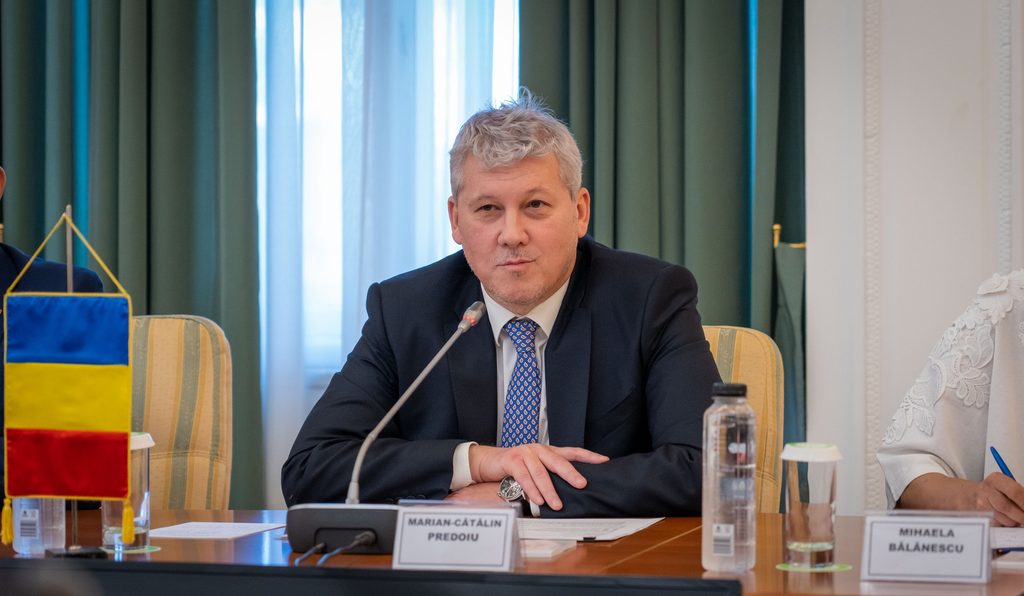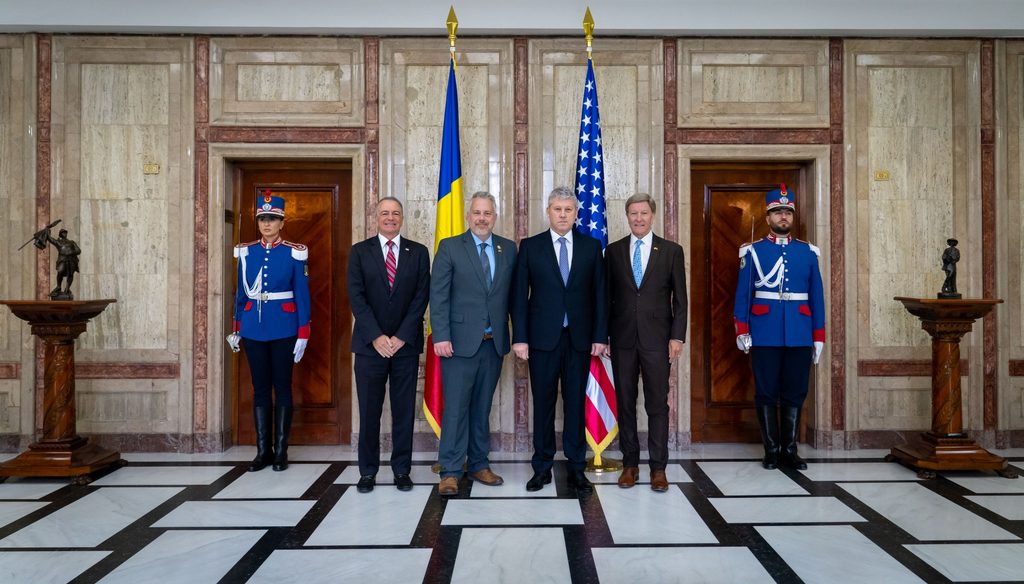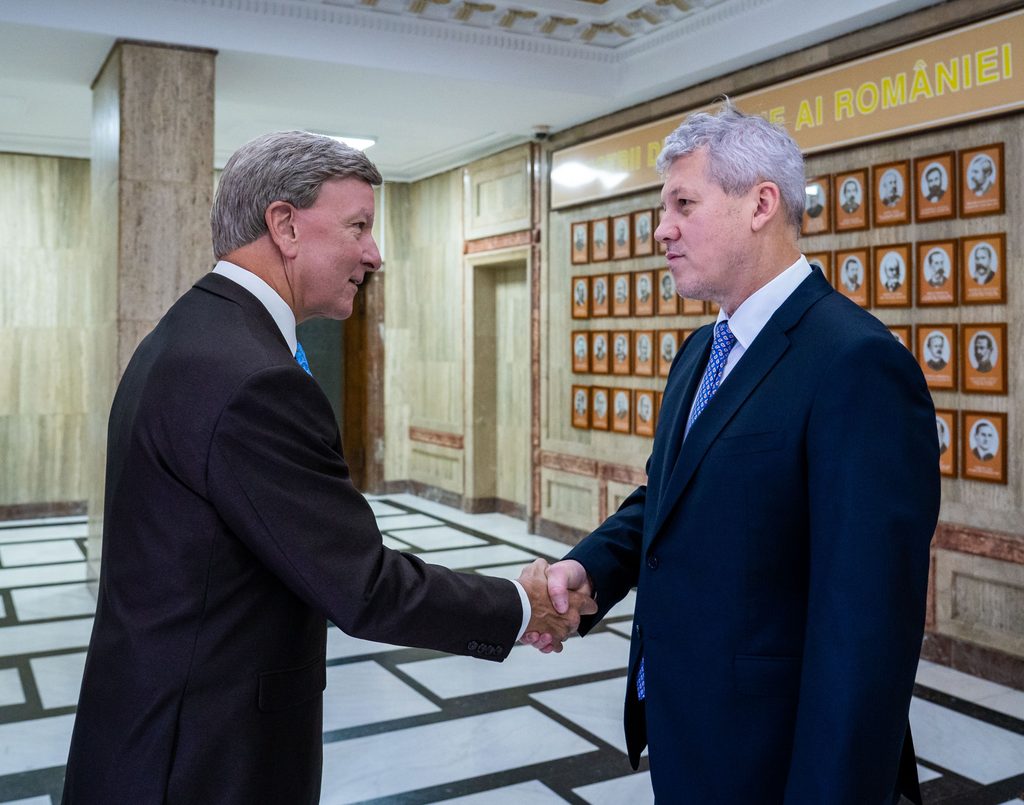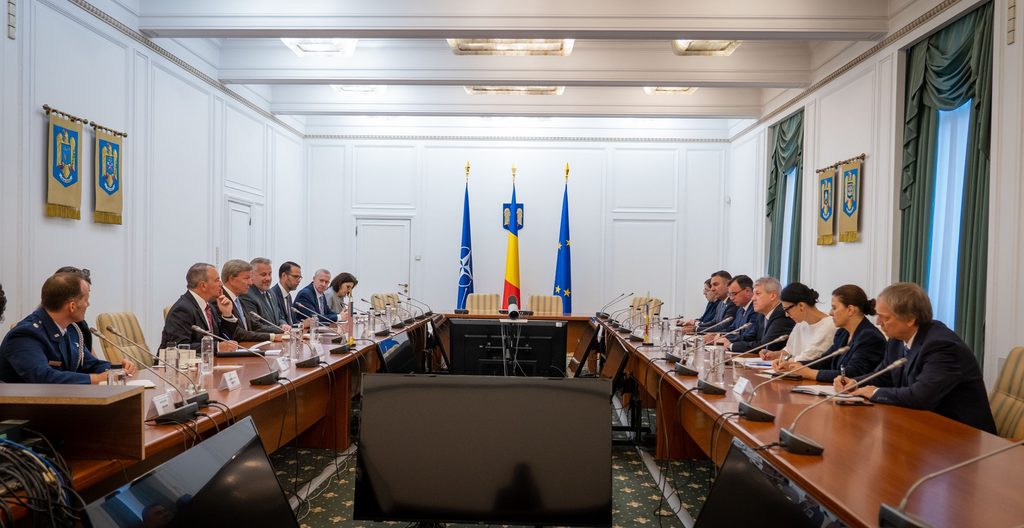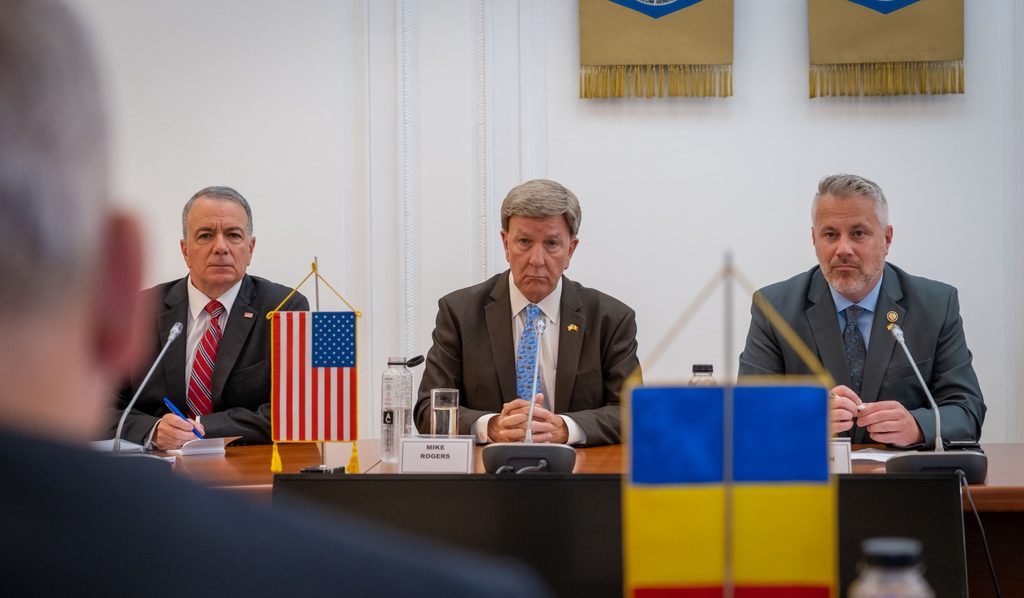
On August 29, 2026, Cătălin Predoiu, Deputy Prime Minister and Minister of Internal Affairs of Romania, met with Congressman Mike Rogers, Chairman of the U.S. House Armed Services Committee, during a visit to Romania by a U.S. congressional delegation led by Chairman Rogers.
The talks focused on strengthening the U.S.–Romania Strategic Partnership, the evolving regional security environment, the strategic importance of the Black Sea, and opportunities to deepen bilateral cooperation in the field of internal affairs and homeland security.
Minister Cătălin Predoiu highlighted the importance of the United States’ continued commitment to the security of NATO’s Eastern Flank and the Black Sea region, as well as the essential role of the transatlantic relationship in the current security environment. He also reaffirmed Romania’s commitment to remaining a reliable ally, security provider, and strategic partner of the United States, actively contributing to regional stability.
Particular attention was devoted to the Black Sea region, whose strategic importance to Euro-Atlantic security has increased significantly amid the current geopolitical environment. Deputy Prime Minister Predoiu emphasized that Romania and the United States share the same fundamental objective in the region: ensuring long-term security and stability. He also underscored Romania’s role in defending NATO’s Eastern Flank and strengthening security across the wider Black Sea region.
Against this backdrop, the Romanian Deputy Prime Minister stressed the direct connection between security, stability, and prosperity, as well as the importance of further developing the economic pillar of the U.S.–Romania Strategic Partnership. A secure, stable, and predictable environment creates the conditions for investment and economic growth, while strategic investment, in turn, strengthens resilience and security. From this perspective, expanding economic cooperation and attracting greater U.S. investment to Romania are important components of the long-term development of the bilateral relationship.
The meeting also addressed the internal security dimension of today’s regional challenges, as hybrid threats, transnational organized crime, cyber risks, and threats to critical infrastructure require increasingly close cooperation between strategic partners.
An important part of the discussion focused on cooperation between Romania’s Ministry of Internal Affairs and U.S. law enforcement and homeland security agencies, particularly in combating organized crime, drug trafficking, human trafficking, border security threats, illegal migration, cybercrime, and terrorism.
Cătălin Predoiu praised the dynamic and results-oriented operational cooperation with the FBI, as well as the continued development of relations with the U.S. Department of Homeland Security, including cooperation with Homeland Security Investigations and U.S. Customs and Border Protection. Both sides expressed interest in further deepening this cooperation through enhanced information sharing, the development of joint capabilities, exchanges of best practices, and the identification of new opportunities for operational cooperation.
The two officials underscored their shared interest in strengthening the security dimension of the U.S.–Romania Strategic Partnership and continuing pragmatic dialogue and cooperation between Romanian and U.S. authorities.
During the talks, Deputy Prime Minister Predoiu also expressed appreciation for the consistent bipartisan support Romania has received from the U.S. Congress, as well as for the attention Congress continues to devote to the security of NATO’s Eastern Flank and the Black Sea region.
“For Romania, the relationship with the United States plays a key role in our security. The SAFE program is still at an early stage, while the European defense pillar is under construction and will take years to become fully operational. Given the regional security environment and its likely evolution, our relationship with the United States and NATO remains essential to Romania’s security.
Against this backdrop, once full constitutional governing capacity is restored, the Romanian Government must do more to strengthen the economic relationship with the United States by generating major economic projects and attracting tens of billions of dollars in U.S. investment in projects capable of driving tomorrow’s economy while also indirectly strengthening security.
American investment has a particular characteristic: it also tends to raise the level of security of the country in which that investment is made. From this perspective, the recent months of political crisis and delays in installing a government with full powers have inevitably meant lost momentum and postponed opportunities.
The installation of a new government with full powers must lead to a renewed push for U.S.–Romania economic cooperation, just as we have done during my term in the areas of internal affairs, public order and safety, combating transnational crime, illegal migration, drug trafficking, terrorism, and cybercrime.
A substantially stronger economic relationship with the United States means greater security and prosperity for Romanian citizens and for Romania, and greater security for Europe as well,” said Cătălin Predoiu, Romania’s Minister of Internal Affairs.
The U.S. congressional delegation, visiting Romania from August 28 to 31, 2026, is led by Congressman Mike Rogers, Chairman of the House Armed Services Committee, and includes Congressman Eric Sorensen (D-IL), a member of the same committee.
The meeting was also attended by H.E. Darryl Nirenberg, Ambassador Extraordinary and Plenipotentiary of the United States of America to Romania.
The visit includes high-level meetings with Romanian officials and activities aimed at strengthening bilateral cooperation in the areas of security and defense.