
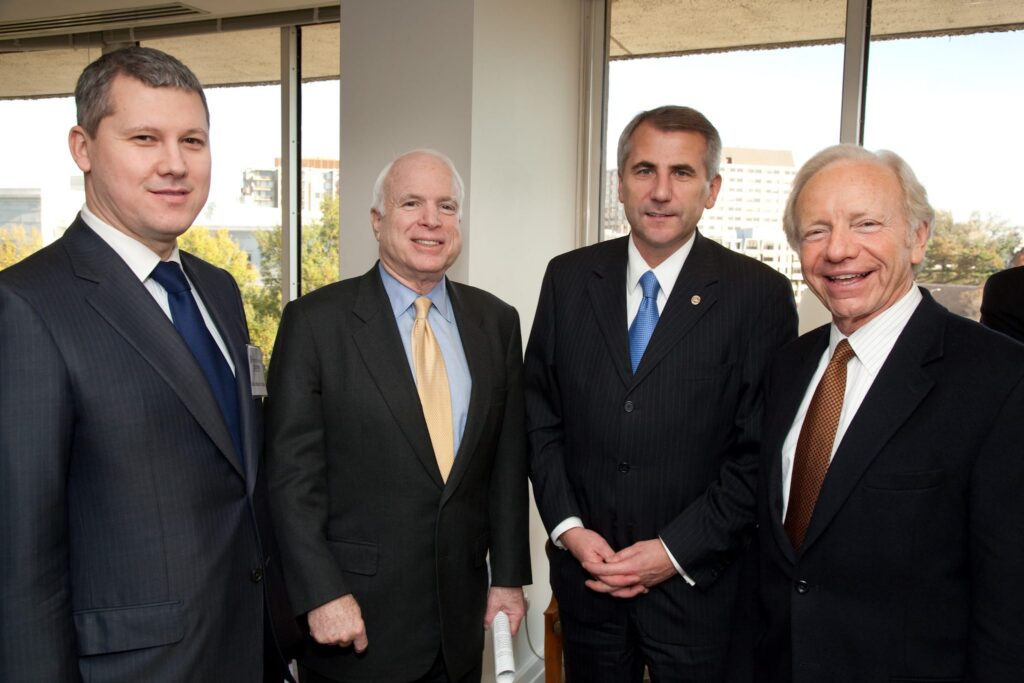
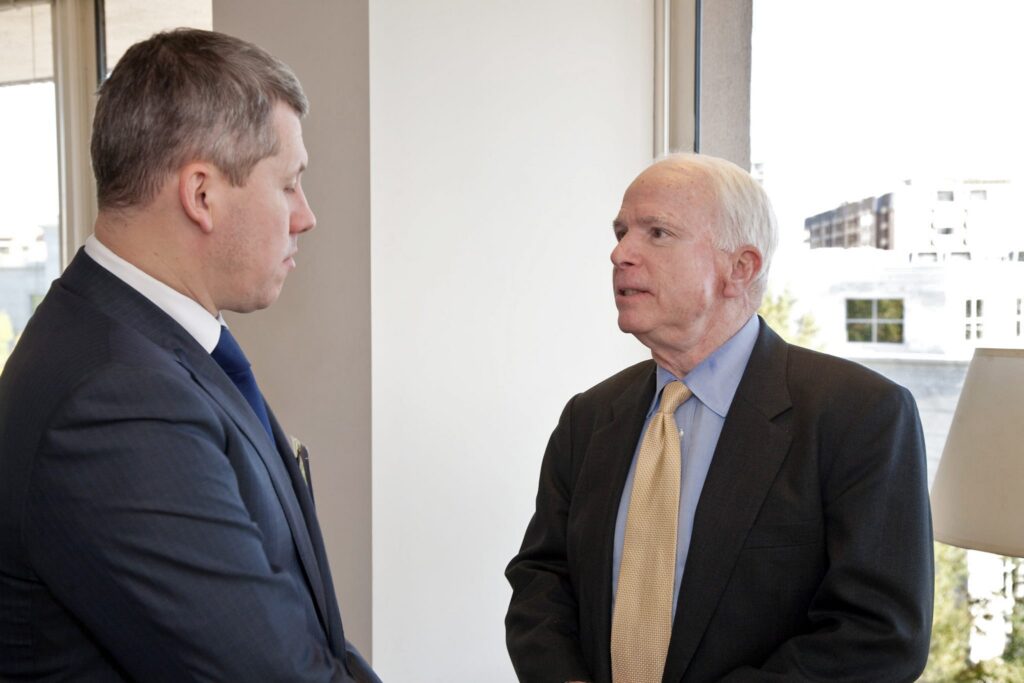
My first real encounter with American politics took place in 2009, when I attended, as a guest, a future-strategy meeting in Washington, in a format that included Henry Kissinger, Zbigniew Brzezinski, Bob Dole, Joe Lieberman, Strobe Talbott, and four-star Admiral Mike Mullen, then Chairman of the Joint Chiefs of Staff. Those eight hours of discussion around that working table, with no concern whatsoever for glittering protocol, taught me more about international politics and the global game of power than everything I had previously read on the subject. Among other things, I came to understand, on the ground, how the world is seen through the telescopes and microscopes of a great power; how the interplay of interests is assessed by first-rank political, geopolitical, and military operators; and, above all, what a medium-sized or small country must do, and how it must act, in order to be seen through those telescopes and microscopes and thus advance its national interest as effectively as possible.
*
Today we celebrate America’s 250th anniversary! Happy birthday, America! A quarter of a millennium after the Declaration of Independence, during which the United States has invented and reinvented itself several times, America is preparing for a new metamorphosis, both at home and in foreign and security policy. In fact, this metamorphosis began some time ago, with the start of the second Donald J. Trump administration. It is being driven by immense transformations, accumulated pressures, imbalances, and changes both within American society and in international relations, in the broadest sense of the term. This new policy is guided by two imperatives: adapting to the new world taking shape before our eyes, especially under the impact of emerging technologies, and preserving America’s primacy in a world in which the postwar and post-communist geopolitical map of power has changed dramatically. As is well known, this political orientation was defined by President Trump through the slogan ‘Make America Great Again.’
Once the conflict in Iran gradually recedes into history, in the months ahead we will see numerous changes, including in the region to which our country belongs geopolitically, generated by the new foreign and security policy strategies directly inspired by the ‘Make America Great Again’ approach. These changes could be so dramatic that those who are unprepared will have no option but to brace for impact.
Put simply, the new U.S. administration operates on the world stage through two high-voltage lines: one ideological and the other military-economic. Administrations that resonate ideologically and in policy terms with the U.S. administration become political partners and natural allies (Argentina, for example). The others have access to the second line: military and economic cooperation. But this is a form of cooperation in which both partners assume responsibilities and make the necessary efforts to generate and sustain common success. The days when a country such as Romania could benefit from U.S. attention and support simply because of its geographic position ended almost two years ago.
The standard formula “We share values” has not become obsolete, but it has become incomplete. For a successful relationship with the United States, it must be complemented by: “We share interests (and projects), we share burdens (and responsibilities).”
A country of Romania’s size and profile—geographic, demographic, and economic—must prepare proactively and quickly for these changes. Beyond the already traditional military and intelligence cooperation, there is significant room to intensify collaboration in combating international crime, organized crime groups, illegal migration, drug and human trafficking, cybercrime, and terrorism. This is why, at the highest level and in my capacity as Minister of Internal Affairs, I promoted raising the level of cooperation between our ministry and the main U.S. agencies in this field: FBI, Homeland Security Investigations, Department of Justice, and the Office of the Director of National Intelligence (ODNI). Beyond the concrete programs discussed, these forms of cooperation raise our country’s profile and added value within the Strategic Partnership.
The area where we must press most forcefully—and where things must be urgently advanced—is the economy. I believe we must urgently prepare a complex portfolio of projects, politically supported and promoted at the highest level, in order to build an integrated economic-security relationship that would turn Romania into an even more valuable, indeed indispensable, partner for the United States—not only militarily, but economically as well. In this regard, I welcome the efforts made by President Dan in recent months and express my conviction that the results will soon become visible.
This national political effort is fully compatible with our membership in the European Union, because a safer, more economically developed, and stronger Romania means a stronger European Union.
At first glance, none of this may seem new. What must be new, however, is proactivity: our own effort, a willingness to take responsibility, the generation of ideas, intensive dialogue, and projects brought to completion within a multidimensional and coherent relationship—one that includes a strong economic pillar oriented toward the economy of the future, with energy, digitalization, and artificial intelligence at its core.
In conclusion, from the perspective of the changes that lie ahead, we should place ourselves firmly on the starting line of the new dynamic generated by the United States, be ready, and move toward a new horizon and a new intensity of the Strategic Partnership. To avoid the alternative of “Brace for impact,” all of us who share this vision should be optimistic, focused, determined, and ready to win.
Happy birthday, USA!
God bless Romania and the United States of America!